Designing and maintaining landscapes that not only provide vibrant, colour throughout the summer but also easily handle the bleak conditions of winter is certainly a challenge!
The most effective strategy is often to utilise hardy herbaceous plants (groundcovers, perennials, grasses, and annuals), that die back in the winter, enabling exposure to harsh conditions that transform come the spring and provide intermediate colour throughout the autumn.
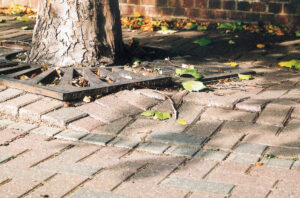
To get winter ready, start by ensuring the removal of all leaf debris, and ensuring kerbs, roadway, and pedestrianised areas are clearly visible and safe for all users. Insulate tender plants from the cold weather with a layer of mulch made from dead plant material like compost, leaves, grass clippings and bark. This will also provide nutrients for the soil as the mulch slowly rots and helps to retain water to keep flowers and plants healthy.
As highlighted in our Let’s Get Planting campaign in conjunction with National Tree Week, Autumn and Winter are the best time to plant trees. Why, may you ask?
In winter months (November to March), trees are dormant, meaning the trees are not actively growing, they are having a rest! However, roots are still active, albeit, at a slower pace: once planted, being able to spread in search of nutrients to fully establish slowly.
Winter helps new trees with preliminary root expansion by keeping the soil moist due to regular rainfall. Winter is also beneficial because newly planted trees will not compete against lots of weeds.
As it turns colder and frosts begin to set be mindful of over-gritting/salting too, especially near landscaped areas. Do not brush into planted areas and leave, as excessive salt can cause damage. Have a snow removal plan to minimise the risk to all.
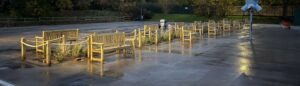
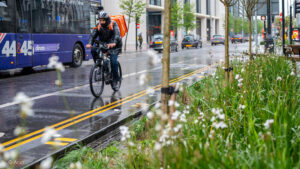
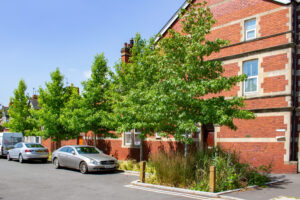
Avoid puddles and pooling of rain, by implementing nature-based solutions; think multi-functional SuDS as a way of handling stormwater, rain gardens and tree pits are perfect for taking on road pollutants, treated and water stored and nourished within the soil, with very little maintenance needed!
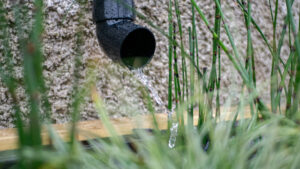
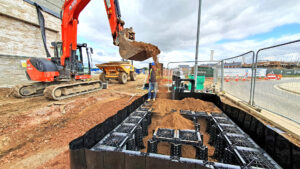
Many new developments are using simple yet effective solutions, such as GreenBlue Urban’s HydroPlanter, the modular system that attenuates rainwater directly from gardens and downpipes. Over time it is a good idea is to check for downpipe blockages to avoid freezing and ensure water flow. The same goes for gully pots, slot drains and channel drains.
Surface water drains will be placed under a lot of strain during heavy rainfall. You can’t stop the heavens from opening – but you can make sure connecting drains are strong, sturdy, and free from blockages that could otherwise lead to catastrophic flooding.
If they are not performing at their best, it could be time to replace them and or consider SuDS solutions as a more attractive, cost-effective alternative that will benefit the environment and all that reside, work and play there.