The process of urbanisation alters the thermal balance of an area resulting in an urban heat island effect where cities can be several degrees centigrade warmer than the surrounding rural landscape. This increased heat can make cities uncomfortable places and, during heat waves, can pose serious health risks. This study looked at the role that trees and grass can play in reducing regional and local temperatures in urban areas during the summer within the urban landscape of Manchester, UK.
In June and July 2009 and 2010, the surface temperatures of small plots composed of concrete and grass in the presence or absence of tree shading were monitored, and measured globe temperatures above each of the surfaces. The same measures were also recorded at mid-day on larger expanses of asphalt and grass in an urban park. Both surface and shade greatly affected surface temperatures.
Grass reduced maximum surface temperatures by up to 24◦C, similar to model predictions, while tree shade reduced them by up to 19◦C. In contrast, surface composition had little effect upon globe temperatures, whereas shading reduced them by up to 5–7◦C. These results show that both grass and trees can effectively cool surfaces and so can provide regional cooling, helping reduce the urban heat island in hot weather. In contrast grass has little effect upon local air or globe temperatures, so should have little effect on human comfort, whereas tree shade can provide effective local cooling.
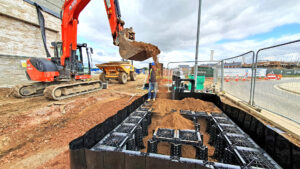
By planting more trees and using GreenBlue products could help sustain trees and help reduce temperatures.