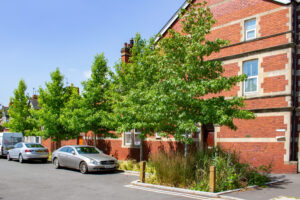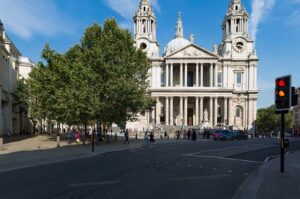
At first sight, new tree planting in hard surfaces on developments looks like an easy target for a value engineering exercise – after all trees are just cosmetic, aren’t they?…
They are the little green blobs on the planning drawing which we can easily remove or reduce and no one will know or care….
But firstly – are they just cosmetic? No, absolutely not!
Trees improve health, create healthy places people want to live, work and play in, manage stormwater runoff, reduce crime – and most importantly for landowners – they significantly increase real estate values, retail footfall and average spend!
Sometimes those trees are also a critical drainage SUDS / LID feature in their own right.
Research has shown that typically, for every £1 invested in tree planting, at least £6 is produced in ecosystem and real estate values. Another study done by the U.S. Forest Service found that every $1 invested in trees brings a return of $2.70 in benefits.
Planting a tree is a once in a generation opportunity – get the below ground design right and the tree, depending on species, could live for 100 years. Get it wrong and you could be replacing in every 8-12 years.
Replacing dead trees because VE has removed the critical below ground components is, therefore, a false economy as cyclic replacement costs will quickly dwarf the investment cost of doing it right the first time.
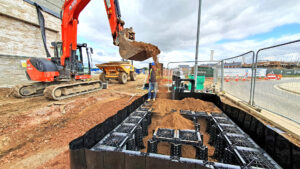
StrataCell soil cells going in at the iconic Olympic StadiumSo, when a VE exercise is called for to enable a scheme to become commercially viable, look very carefully through a ‘socially responsible lens’ at what you reduce or remove. We would suggest four areas to consider:
- Can trees be relocated into soft landscape areas to reduce cost?
- Do you need a tree grille and guard – these items are critical in some areas, but removal will be unlikely to impact negatively on the health of the tree, unless vandalism is anticipated.
- Can expensive large volume structural soil mixes / tree sand elements be changed to more cost effective and space efficient soil cells such as RootSpace to reduce excavation costs?
- Can tree pits in hard surfaces be linked together below ground to reduce required soil volume by 20% per tree?
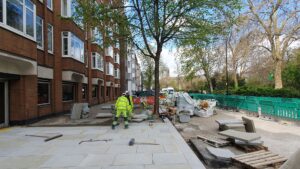
Linked tree pits flourishing in GBU soil cells at Wembley StadiumIf soil cells are initially specified, beware of considering structural soils like ‘rock soil mix’ or ‘compactible tree sand’ as an alternative, because you will need approximately a multiple of five times the soil cell pit volume to provide the tree with the same amount of useable soil/nutrient/water! The recommended minimum volume for a structural rock/soil pit is 50 cubic meters per tree – which provides the same useable soil content as a 10 cubic meter soil cell pit.
Long-term tree health is inextricably linked with healthy uncompacted soil volume available for the tree to root into. Established trees are vital for sustainable cities, and provide multiple ecosystem benefits.
One large canopy volume tree provides the ecosystem benefit of 60 small trees.
Value engineer tree planting with extreme caution, as reducing below ground rooting provision may seem attractive financially in the very short term, but the results can be with whole communities, positively or negatively, for generations to come.