The amount of carbon the Amazon region’s remaining trees removed from the atmosphere in the last decade fell by almost a third, according to leading scientists. They continue by warning that man-made carbon emissions will need to be even more severely reduced in order to tackle climate change.
Trees in untouched areas of the forest have been dying off at an increasing rate, a published study uncovered, speculating the likely cause as more extreme weather variation in the region. They also suggested that more CO2 in the atmosphere was counterintuitively leading to trees dying younger.
Leeds University professor Dr Roel Brienen says the Amazon was responsible for one-fifth to one-quarter of carbon sequestered. Meaning any decline in its efficiency as a carbon sink was of consequence to human efforts to combat climate change.
If this trend continues, it means that the subsidies society has been getting from nature (from the forests taking up part of human-generated emissions put into the atmosphere) are lessening. And the more that amount reduces, the more stronger cuts we have to make in CO2 emissions in order to mitigate those effects.
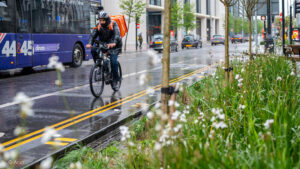
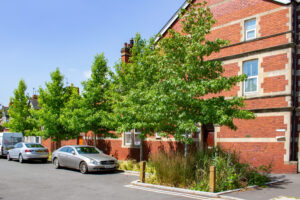
Globally, vegetation is locking away more carbon as CO2 levels in the atmosphere rise. Plants are growing faster, as they are fueled by a more fertile atmosphere. But the Amazon is eschewing this trend, meaning that green coverage in our urban areas may need to be considered to help mitigate the threat.
Dr Brienen said the forests may also be experiencing the consequence of higher CO2 levels, suggesting that the tree’s accelerated growth is leading to them dying younger. As the dead trees decay, they slowly release much of their stored carbon to the atmosphere.
The hypothesis is consistent with predictions made by an Australian scientist in 2009, stating that as the air became more rich with carbon, the Amazon would lose much of its ability to absorb it.