In previous blogs, we have discussed resilience, what it means, how it can be achieved and how it can be maintained. In this piece, we celebrate projects in which GreenBlue Urban has been privileged to be involved, where we believe that excellence in resilience has been designed and implemented.
Creating an inspiring yet resilient space needs consideration of not only all stakeholders but also taking into account predicted climate change. It requires careful thought as to how the space may be used now, and into the future. It calls for long term vision and an understanding of how different materials will react and respond to potential differences in travel and other uses. It is a truly multi-stranded challenge which GreenBlue Urban considers a collaborative approach is critical for success.
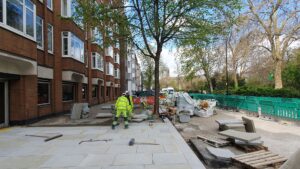
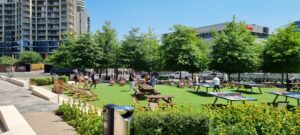
Where this collaboration has been achieved, we have seen phenomenal success; projects such as Commercial Way, Woking, the main retail area has been transformed by tree planting and new surfacing. Still allowing for emergency vehicle access, this pedestrian area gives plenty of restful seating areas, safe cycle parking and access to many retail outlets, and the trees are thriving. These trees give shade in the summer, aid infiltration and canopy interception during rainfall events and enhance the visual amenity of this hard engineered area. Working with Gillespies as designers, McLaughlin and Harvey as installers and Woking Borough Council as the client, the installation was simple, and the finished project was a great success.
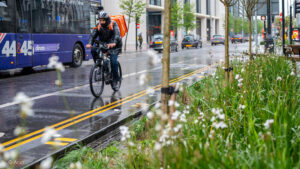
Another amazing project is the redevelopment of Station Road, Ashington. This Northumberland Victorian mining town had the main shopping street redesigned to be truly multipurpose. The weekly Tuesday market with over 30 stalls dominates the street, and therefore the need for pedestrian access was very important. However, vehicle access is still needed to the shops, and parking needed to be retained for shoppers. The low-level planting/rain garden scheme separates the vehicles from the market stalls and pedestrians, and the healthy tree planting in between the stalls gives protection from the sun, helps mitigate against extreme rainfall events and gives a sense of place and permanence. The ArborVent aeration inlets to the trees also help drain the paving, irrigating the trees and reducing the pressure on the existing drainage network. This scheme was accomplished by working with Northumberland County Council and Ashington Town Council, and installed by Northumberland Highways – and has proven to be very popular with locals and visitors.
Supporting resilience on a global scale and enabling mitigation measures that have recently been adopted by fellow partners of the Cool Towns project has been a joy. Working alongside one another for the past few years during unprecedented times now sees the project drawing to a close with many pilots complete and flourishing with GreenBlue’s ArborSystem products. Breda in the Netherlands has seen the most dramatic transformation, the SuDS Tree Pits in Margate has brought attention at the government level and Southend Town Centre is thriving all the while tackling the heat island effect and adapting to climate change.
These examples are just some of the many phenomenal case studies that are available on the GreenBlue Urban website. Across the world GreenBlue Urban products have been used to help create sustainable and resilient towns and cities, proving that good design and effective installation can transform tired places into resilient places – resilient places for all in harmony with nature.