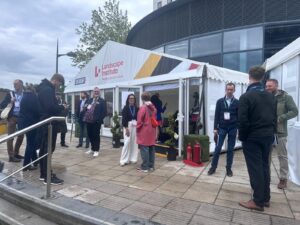
This year professionals from the length and breadth of the country and beyond gathered in Greenwich for the Landscape Institute Valuing Landscape Conference discussions related to how the concept of value relates to the landscape profession.
The term value is loaded and presents those of us working to achieve the highest quality schemes with a difficult task. How do we value the intangibles associated with green infrastructure and SuDs and what mechanisms and tools can we develop to assist in our endeavours?
Of course, we have to admit that aspects of our landscape will not be as valuable as others but how do we come to these decisions, and most importantly, who decides and why?
The morning of the first day of conference began with a very idealised, and in many respects, an emotional approach, galvanising the troops to fight against those forces that work against the implementation of the landscapes that can save the planet and deliver for future generations. This was particularly notable in the speech by Jan Christian Vestre.
It was encouraging to hear from Dr Wei Yang regarding the inroads being made in China and how landscape is transforming their polluted public realm. She made some important comments relating to the term ‘garden city’ and the value we must capture from the communities of the future.
Discussing the valuation of intangibles was also an important topic to apply to the landscape profession. At GreenBlue Urban we are always asked to place a precise value on urban trees and the SUDs interventions we espouse. But what values should we prioritise as a society and what kind of legacy are we leaving future generations? It was questions such as these that Professor Ian Hodge from Cambridge University responded to in his paper.
The second day focused on workshops and an excellent array of site visits including the Olympic Park. GreenBlue were proud to have been able to contribute to that scheme. One of the most insightful workshop sessions focused on how the new NPPF will affect our future landscapes.
For an overview of the conference and a discussion of the main takeaways from the event please visit this link to hear the podcast interview with Adam White, President of the LI and Director of Davis White Associates.